


26 Million Bags Vanish Every Year: Here Are 9 Reasons Travelers Are Ditching AirTags for This Tracking Card
Same Apple Find My network. Completely different form factor. Here's what that means in practice.
 By Jade M.

Last Updated April 7, 2026
Summary: Millions of bags vanish at airports every year, and airlines do almost nothing to help you find yours. AirTags are good trackers, but they aren't built for travel. They die without a warning and don't fit where you need them most.

1. Airlines Can't Help You
Every day, 71,000 bags vanish at airports worldwide. It is not always the airline's fault. Bags get misrouted during tight connecting flight transfers or loaded onto the wrong aircraft.
By the time the airline starts looking into it, your bag could be anywhere across a network of hundreds of airports. Even the most helpful customer support agent can only do so much when the bag has already disappeared into the system.

2. Dead Batteries Don't Wait for Convenient Moments
AirTag runs on a CR2032 coin battery. Replacing it is simple enough at home. The problem is timing.
If your battery dies a month before your trip and you forget to replace it, your tracker is completely useless when your luggage goes missing on a connecting flight.
There is nothing worse than realizing your tracker is dead while your bag has just gone missing.

3. A Lost Bag Is Costly
When your luggage doesn't arrive, it means you are also losing precious time and money. All of a sudden you need to start looking for clothes, a local pharmacy for your medication, and a new suitcase to pack all of your newly acquired stuff.
Airlines will reimburse you eventually, if you file the right paperwork, keep every receipt, and follow up repeatedly. In the meantime, you are out of pocket and on your own in an unfamiliar city. The bag is just a bag. What's inside it is the problem.
4. Watch Your Bag Get Loaded Onto The Plane
With Thritake placed inside your baggage, you can open your phone as soon as you board and watch your bag get loaded onto the plane in real time.
When you land, you can see it moving before you even reach baggage claim.
This eliminates the anxiety of not knowing where your baggage is. You are no longer waiting and hoping. You know exactly where it is at every step of the journey.
5. One Battery Charge Every... Never
Thritake charges on any Qi wireless charger. One charge lasts 8 months. Set a reminder for every half-year, charge it, and then forget about it again.
No more buying coin batteries, and no more dead trackers mid-trip. You can travel with total peace of mind knowing your tracker is fully powered.

6. You're Not Giving Up Apple's Network
Thritake uses the same Apple Find My network as AirTags. That is over 1 billion Apple devices worldwide helping locate lost items, with the same privacy protections built in. You don't trade network coverage for a better design. You get both.

7. It Disappears Into Your Luggage Lining
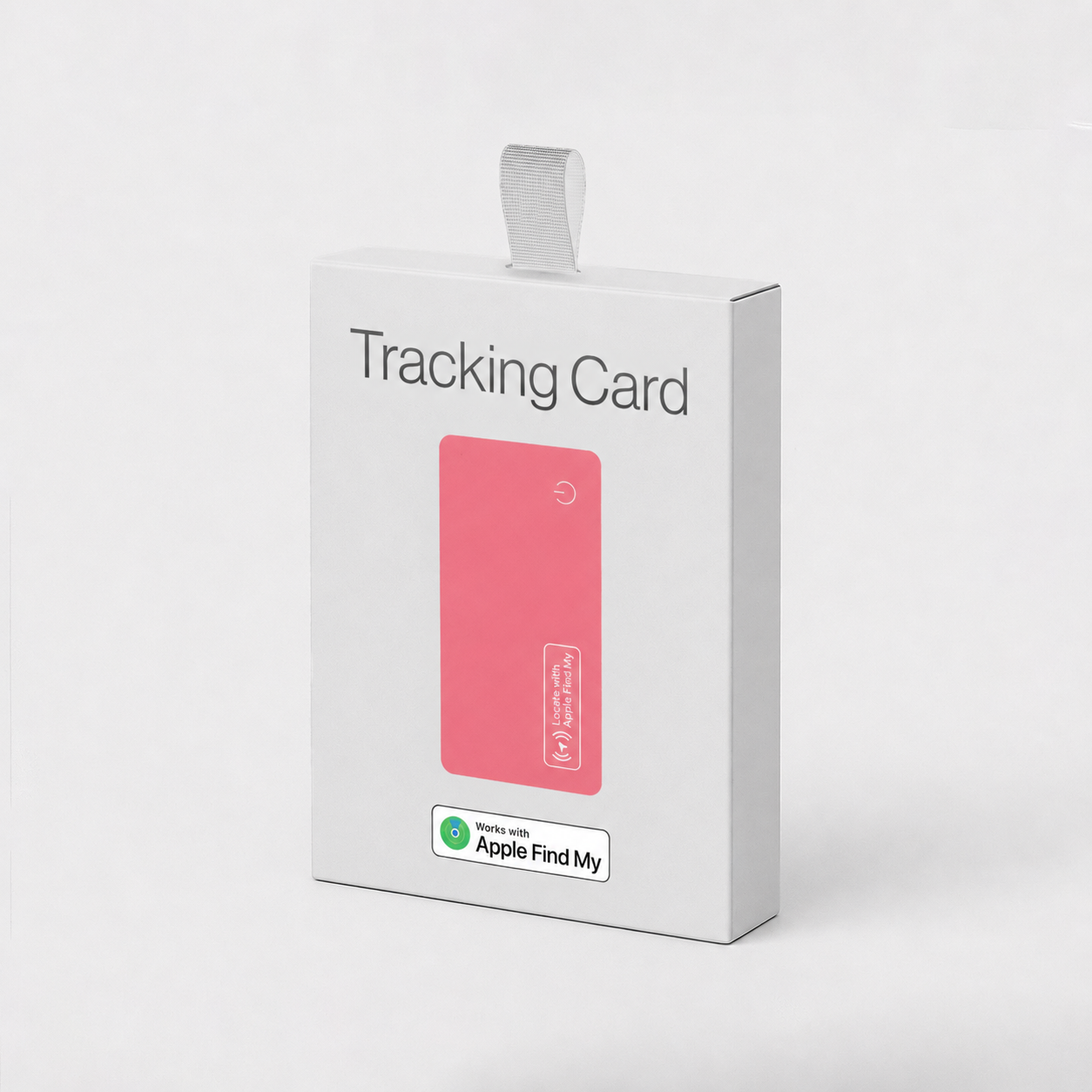
Thritake is a tracking card that is just 1.8 millimeters thin. It slides effortlessly into your suitcase lining, your carry-on, or your passport holder and completely disappears.
There is no bulk and no obvious sign that you are tracking your belongings. If someone grabs your bag, your tracker goes with it unnoticed.

8. AirTags Cost More Over Time
A single AirTag costs less upfront. But CR2032 batteries cost roughly $5 to $8 for a pack, and if you track multiple items, those replacements add up each year.
Thritake has no battery cost after purchase. If you are tracking a suitcase, a carry-on, and a wallet, the bundle pricing works out cheaper over its lifetime.

9. It Comes With a 30-Day Money Back Guarantee
If Thritake doesn't do exactly what we say it does, send it back. Full refund, no questions asked.
30 days is enough time to take a trip, lose your bag, and forget you even need to charge it. If it doesn't earn its place in your luggage by then, it shouldn't cost you anything.


Tracking Card
Tracking Card
Couldn't load pickup availability



Questions & Answers
What is the Thritake Tracking Card used for?
What is the Thritake Tracking Card used for?
It helps you keep track of luggage, carry-ons, wallets, passport holders, and other important travel items through the Apple Find My network.
Does it work like an AirTag?
Does it work like an AirTag?
It uses the Apple Find My network, but comes in a slim card shape that fits more easily into luggage lining, wallets, passport holders, and flat compartments.
Do I need to replace coin batteries?
Do I need to replace coin batteries?
No. The tracking card is rechargeable and works with Qi wireless charging, so you do not need to buy or replace disposable coin batteries.
How long does one charge last?
How long does one charge last?
One full charge can last up to 8 months, depending on usage and conditions. For travel, we recommend charging it before longer trips.
Can I hide it inside my luggage?
Can I hide it inside my luggage?
Yes. At only 1.8mm thin, it slides easily into suitcase lining, carry-ons, wallets, or passport holders without adding bulk.
Can I check whether my bag made it onto the plane?
Can I check whether my bag made it onto the plane?
You can open the Apple Find My app to view your item’s location when it updates through the network, helping you feel more informed during your trip.
Is it only for suitcases?
Is it only for suitcases?
No. It is also useful for wallets, backpacks, passport holders, laptop bags, handbags, and other travel essentials.
What if I am not satisfied?
What if I am not satisfied?
You can try it with the 30-Day Money Back Guarantee. If it does not fit your travel needs, you can request a return according to store policy.